“Chatta is truly transformative. It brings learning to life and every time I use it, I’m amazed by the outcomes.“ Paige Allen, Year 1 teacher, Brooklands Primary School
The guidance is clear. Before any additional support is considered, before any referral, schools are expected to have high quality, inclusive teaching already in place. Teaching that scaffolds. That models. That makes vocabulary visible. That gives children time to process. Teaching that doesn’t wait for a diagnosis before it responds to a child.
Ordinarily available. For every child. Every lesson.
The honest question many school leaders are asking is: does that actually describe what’s happening in our classrooms?
Ordinarily Available Inclusive Provision describes what good teaching should include. Modelling and scaffolding to aid understanding. Visual and audio demonstrations. Key vocabulary displayed with visuals. Time to process before responding.
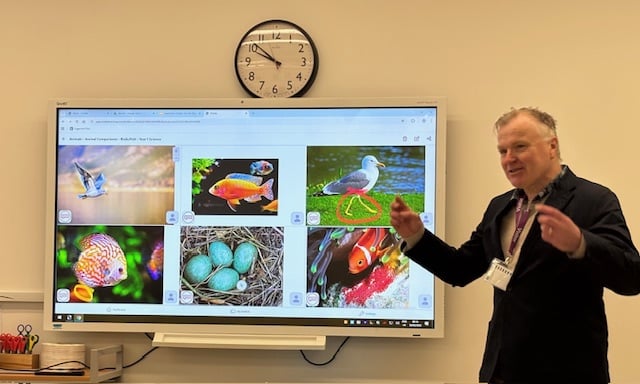
A Chatta board is built live in front of the children, modelling thinking in real time. Images, words and audio sit together, making vocabulary visible and accessible to every learner. Children hear language in context, repeatedly, before they’re asked to produce it themselves, not memorising or regurgitating, always composing their own sentences based on their own understanding. Nobody is withdrawn. Nobody waits. Teachers can aim high for the whole class, knowing that the scaffold is already there for everyone.
At Brooklands Primary School, three teachers tell the same story from three different starting points.
Grace works in EYFS. In a recent writing lesson, children engaged deeply with the Chatta board, retained sentences, and began speaking in full sequenced sentences, foundational skills that can take a long time to establish. Paige teaches Year 1. She describes knowledge retention that far exceeds anything she has seen before. Marie teaches Year 5. A history lesson on the Battle of Marathon, always difficult because of the volume of facts, names and dates, became one where children recalled events quickly and used new vocabulary instantly. A lesson that used to be a struggle became one of the strongest she’d taught.
Three year groups. Three different starting points. The same pattern.
Amy works with students with dyslexia, from primary age through to GCSE. She sees consistent improvement in language and vocabulary, and a willingness and excitement to write that simply hadn’t been there before.
The impact isn’t gradual. Teachers see it the first time they use it. One deputy head, watching children with SEND produce work that had previously been out of reach, said: “Children with SEND suddenly don’t have SEND with Chatta!”
That’s what Ordinarily Available Inclusive Provision can look like. In every subject. For every child.